
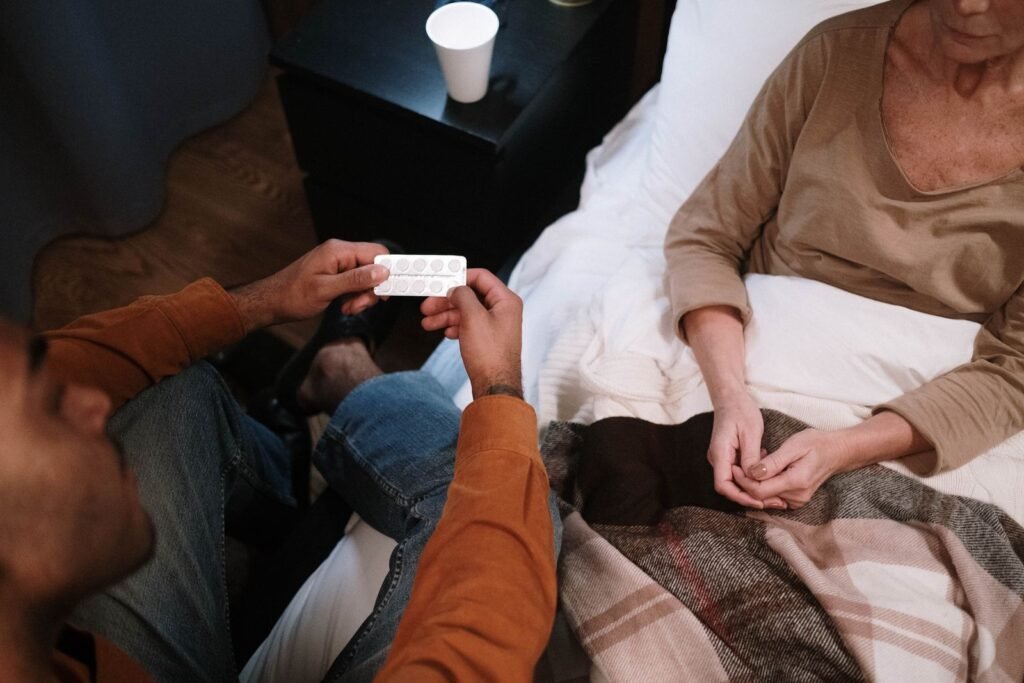
The call usually comes at a hard moment. A parent is being discharged after a fall or a surgery, the doctor says “they will need care at home”, and the family has two days to sort it out. Somebody suggests a nurse. Somebody else says a caretaker is enough and costs less. Both can be right. It depends on what your family member actually needs through the day and night.
This guide explains the difference in plain words, what decides the cost, and the checks we would do before letting anyone into our own home to look after someone we love.
Home nurse vs caretaker: the short answer
A home nurse is a trained and registered nursing professional (usually GNM or B.Sc Nursing, sometimes ANM) who can do medical tasks a doctor has prescribed. A caretaker, also called an attendant, patient care assistant or “aaya”, helps with daily living: bathing, feeding, toileting, moving, company and watching for changes.
If the person needs injections, a drip, wound dressing, a catheter, tube feeding or close monitoring after surgery, you need a nurse, at least for those tasks. If they are medically stable but cannot manage alone, a trained caretaker is usually the right fit.
What a home nurse does
- Gives medicines and injections exactly as the doctor has prescribed, including IV drips where the doctor has advised it.
- Checks and records vital signs: blood pressure, pulse, temperature, oxygen level and blood sugar.
- Dresses wounds and surgical sites, and looks after bedsores.
- Manages catheters, feeding tubes (Ryle’s tube or PEG), tracheostomy care and suction, if trained for them.
- Spots warning signs early and knows when to call the doctor.
- Teaches the family what to do once nursing visits stop.
Many families use a nurse for a short period after discharge, or only for a visit or two a day, and a caretaker for the rest of the time.
What a caretaker does
- Helps with bathing, sponge baths, changing clothes and diapers, and oral care.
- Helps with feeding by mouth, and reminds about medicines the family has set out.
- Helps the person sit, stand, walk and change position in bed, which matters a lot for avoiding bedsores and falls.
- Keeps the room and bedding clean.
- Gives company, which is not a small thing. Loneliness weighs heavily on many older people.
- Tells the family quickly if something seems wrong.
Can a caretaker give injections or medicines?
A caretaker can hand over tablets that the family or nurse has already sorted, and remind the person to take them. Injections, drips, changing a catheter, tube feeding and wound care are nursing tasks. Do not ask a caretaker to do them, even if they say they have “seen it done in hospital”. If a caretaker or agency offers to do these, ask for a registered nurse instead.
What training should each one have?
Nurses
Nurses in India must be registered to practise. The National Nursing and Midwifery Commission Act, 2023 replaced the old Indian Nursing Council Act of 1947, and it provides for a national register and state registers of nurses and midwives. In practice, nurses are registered with their State Nursing Council. Ask the nurse for their registration number and certificate, and check it with that state council. Many councils have an online search; if yours does not, the council office can confirm it. The online route for the new national register was still unclear when we checked, so we have not named one here.
Caretakers
Caretakers are not licensed the way nurses are, so training varies a lot. Government-recognised short courses exist under the Healthcare Sector Skill Council, such as Home Health Aide and General Duty Assistant (GDA). These are listed on the National Qualifications Register (nqr.gov.in). A certificate from one of these courses is a good sign. It does not replace a trial day and your own eyes.
What decides the cost
We are not giving rupee figures here, because charges differ a lot from city to city and agency to agency, and a number we cannot stand behind would only mislead you. What we can tell you is what pushes the price up or down, so you can compare quotes properly:
- Nurse or caretaker. A registered nurse costs more than a caretaker almost everywhere.
- Hours. A visit for one task (an injection or a dressing) is charged differently from a 12-hour shift or a 24-hour live-in arrangement.
- How much care is needed. A bedridden patient, a patient on a feeding tube or one who needs lifting usually costs more.
- Agency or direct. An agency fee often covers a replacement if the person leaves or falls sick, and someone to complain to.
- Food and stay. For live-in care, ask clearly who provides meals and a place to sleep.
Always ask for the charges in writing, with what is included, the notice period, the replacement policy and any registration fee. Ask whether that fee is refundable.
12-hour shift or 24-hour live-in?
A 12-hour day shift works when family members can cover the night. A 24-hour live-in caretaker suits a person who needs help at night too, such as getting to the toilet or being turned in bed. Remember that a live-in caretaker still needs sleep and a break. One person cannot stay awake and alert for 24 hours a day, week after week. If the nights are heavy, two 12-hour shifts are safer.
Agency or hiring directly?
Hiring directly through someone you trust can work well, but you carry all the checks yourself, and nobody steps in if the person stops coming. A good agency should verify identity and background, give a replacement, and tell you clearly whether the person is their employee. Whichever way you go, the checks below still apply.
Checks before you hire
- Identity: see an original ID and keep a copy, with a recent photo and a permanent address.
- Police verification: most state police offer verification of domestic helps and attendants, online on the state police citizen portal or at the local police station. Do this even when an agency says it already has.
- Nurse registration: check the registration number with the State Nursing Council.
- References: speak to one or two families they have worked with before, not just a name on paper.
- Trial day: watch how they lift, talk to and clean your family member. Respect and patience show quickly.
- A written note of duties: what they will and will not do, the timings, and who to call in an emergency.
Does health insurance cover home nursing?
Sometimes, but do not assume it does. Some health policies cover domiciliary hospitalisation, meaning treatment at home for an illness that would normally need a hospital stay, when a doctor advises it. In 2021 the insurance regulator IRDAI allowed insurers to offer home treatment as an add-on cover. Policies differ a great deal, and ordinary caretaker help with bathing and feeding is usually not covered. Read your policy wording, and ask your insurer or TPA before you start, with the doctor’s written advice in hand.
When home care is not enough
Call the doctor, or go back to hospital, if there is breathlessness, chest pain, sudden confusion, a fall with pain, high fever, a wound that is getting red or smelly, or very little urine. A good nurse or caretaker will raise these early. Do not let anyone talk you out of getting help.
For older family members, the government’s free national helpline for senior citizens, Elderline (14567), gives information, guidance and emotional support, and can step in on cases of neglect or abuse.
How Amica Directory helps
Every business on Amica Directory is free to list and is checked by the Amica team against its Google Business Profile before it goes live. That is a starting point, not a replacement for the checks above, especially for someone who will be in your home every day. Browse home care services across India or all checked businesses. If you run a home care service yourself, list it for free.
Frequently asked questions
What is the difference between a home nurse and a caretaker?
A home nurse is a registered nursing professional who can give injections, drips, wound care and other prescribed medical care. A caretaker helps with daily living: bathing, feeding, toileting, moving and company. Many families use both.
Can a caretaker give injections at home?
No. Injections, IV drips, catheters, tube feeding and wound dressing are nursing tasks. Ask for a registered nurse for these, even if it is only a short visit each day.
How do I check if a home nurse is registered?
Ask for their nursing registration number and certificate, then confirm it with the State Nursing Council that issued it, through its website or office.
Is a 24-hour caretaker better than a 12-hour one?
Only if night help is needed. A live-in caretaker still needs sleep and breaks. For heavy nights, two 12-hour shifts are safer.
Does health insurance pay for a home nurse?
Some policies cover domiciliary hospitalisation or offer a home-treatment add-on when a doctor advises it. Cover varies, and routine caretaker help is usually excluded. Check with your insurer before you start.
Should I do police verification if I hire through an agency?
Yes. It is quick, and you will have your own record of who is in your home. Most state police offer it online or at the local police station.
Is there a helpline for senior citizens who are neglected or need support?
Yes. Elderline, the national helpline for senior citizens, is free on 14567. It gives information, guidance and emotional support, and can step in on cases of abuse or neglect.